Are the Kids Alright?: An Exploration of Emerging Adults’ Psychological Mastery, Hopes, Fears, and Perceived Implications of Gen-AI

Sifana Sohail, Ph.D. (Wesleyan University), Royette T. Dubar, Ph.D. (Wesleyan University), Catherine (Katie) Sykes (Wesleyan University), & Paul Quach, B.A. (Wesleyan University)
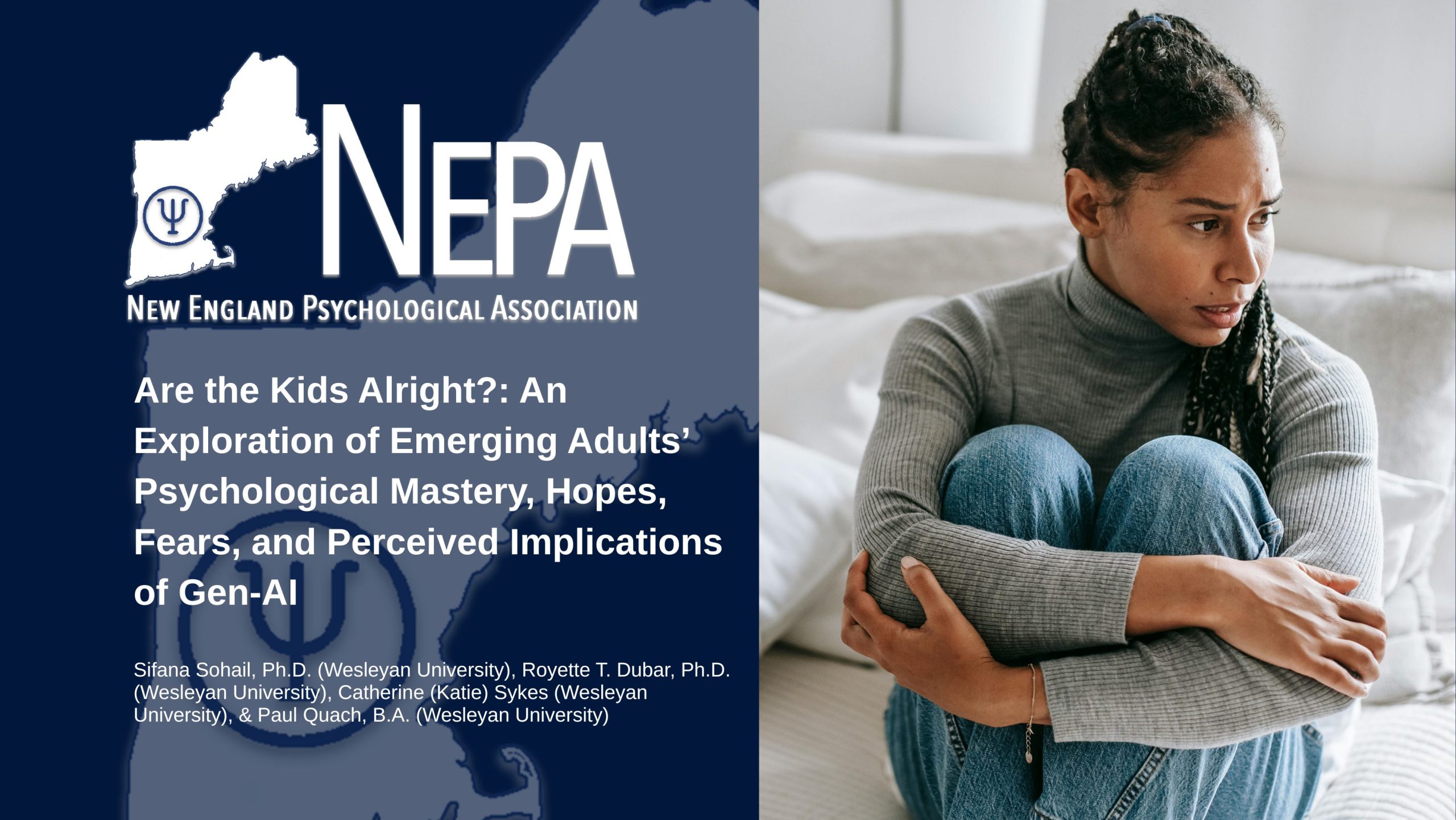
 

Emerging adulthood is a developmental period associated with heightened vulnerability to anxiety and other mental health challenges (Arnett et al., 2014). Alongside concerns about academics, relationships, and identity, today’s emerging adults are navigating the growing influence of generative artificial intelligence (Gen-AI) on education, careers, and interpersonal life.

Guided by Bronfenbrenner’s Person-Process-Context-Time (PPCT) model (Bronfenbrenner & Morris, 2006), this symposium examines students’ psychological resources, hopes, fears, and views of AI’s impact on society. Together, the four papers offer a developmental perspective on how emerging adults navigate the opportunities and challenges of university life.

The first paper examined perfectionism, perceived mastery, and coping as concurrent predictors of anxiety symptoms among 223 university students (51.6% female, 57% non-Hispanic White, and 21.1% first-generation). Higher perceived mastery was associated with lower anxiety, while higher self-oriented perfectionism was associated with greater anxiety.

The remaining three papers draw on a mixed-methods study of 194 first-year students at a small liberal arts college in New England (mean age = 18.55 years, SD = 0.84). Students answered open-ended questions in an online survey, and their responses were analyzed using Braun and Clarke’s (2006) thematic analysis approach.

The second paper explored students’ responses to the question, “What is your biggest hope for the world?” Themes included interpersonal understanding and compassion; peace; diversity, equality, and freedom; systemic change; climate change and generativity; and stability and safety.

The third paper asked, “At this point in your life, what is your biggest personal fear?” Eight themes emerged: fear of failure; lack of purpose, satisfaction, or passion; loss of interpersonal connections; not finding romantic love; financial worries; uncertainty about the future; death, injury, and physical health concerns; and traditional phobias.

The fourth paper examined students’ responses to the question, “What are 3 words that describe your current thoughts and feelings about the impact of Gen-AI on society?” Six themes reflected a range of attitudes and concerns: AI’s negative impact; neutral or indifferent views; AI’s positive impact; its pervasiveness and generational impact; the “dark side” of AI; and potential threats to cognitive and intellectual functioning.

Together, these papers show how emerging adults make sense of personal and societal challenges during a period of rapid political and technological change. The findings have implications for programs and services that support students navigating complex academic, social, and technological environments.

CONTACT

Association Coordinator’s
Mailing address:

Michael Amico, Ph.D.
Housatonic Community College
900 Lafayette Blvd
256 Beacon Hall
Bridgeport, CT 06604

NEPsychological@gmail.com
Phone: 203-362-5163

SOCIAL MEDIA

Facebook
Twitter

ABOUT

The New England Psychological Association presents invited addresses, symposia, workshops, papers and posters at annual autumn meetings held in the six New England states, usually on a college campus.